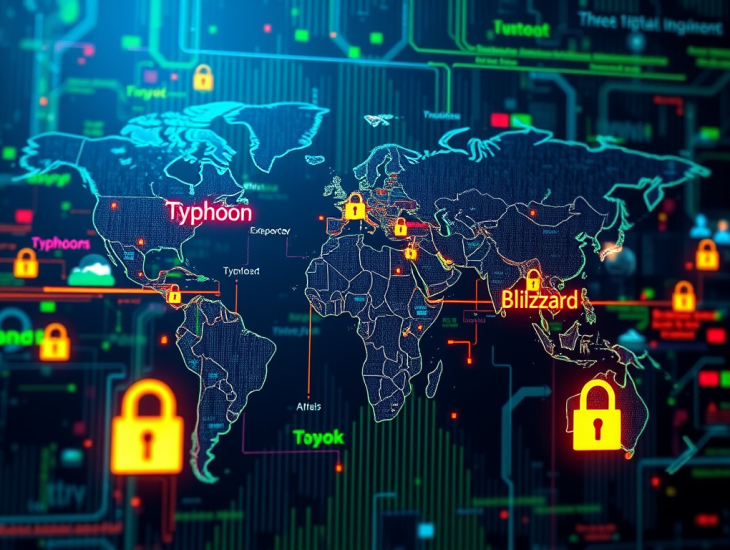
In today’s dynamic cybersecurity landscape, staying ahead of emerging threats is crucial for protecting digital assets. Microsoft’s threat intelligence platform provides a powerful, data-driven approach to identifying and mitigating cyber threats. By processing immense amounts of information daily, Microsoft delivers actionable insights that empower organizations to bolster their defenses.
This blog explores Microsoft’s capabilities and its pivotal role in modern threat intelligence.
The Scale of Microsoft’s Threat Intelligence Operations
Microsoft’s threat intelligence system operates at a scale unmatched in the industry. For example, during a recent global ransomware campaign, Microsoft’s platform swiftly identified attack patterns and released mitigation strategies, enabling thousands of organizations to respond effectively.
Key highlights of its operations include:
- 78 trillion signals processed daily: These signals stem from a vast array of devices, applications, and cloud services worldwide.
- 1,500 tracked groups: Microsoft analysts monitor a diverse range of threat actors and their activities globally.
Microsoft’s tracked signals fall into distinct categories:
- State-sponsored actors: Nation-states leveraging cyber tools for espionage, sabotage, or influence campaigns.
- Financial crime groups: Threat actors targeting monetary gain through ransomware, phishing, and fraud schemes.
- Private Sector Offensive Actors (PSOA): Cyber mercenaries conducting attacks on behalf of clients.
- Dev Groups (DEV): Teams focused on developing malicious tools and infrastructure.
Majority of Tracked Activities: Key Threat Groups
To simplify tracking and communication, Microsoft assigns weather-themed names to threat groups, making it easier for security professionals to identify and respond to threats.
Here are some of the most prominent groups:
- Typhoon (China)
- Represents cyber campaigns originating from China.
- Activities include espionage, intellectual property theft, and intelligence gathering.
- Sandstorm (Iran)
- Tracks operations linked to Iran.
- Focuses on disruptive actions, espionage, and influence campaigns.
- Sleet (North Korea)
- Covers North Korea’s cyber initiatives.
- Known for cryptocurrency theft, espionage, and sabotage efforts.
- Blizzard (Russia)
- Represents Russian threat actors.
- Activities often involve disinformation, espionage, and cyber warfare.
- Tempest (Financially Motivated)
- Includes ransomware groups and other financially driven attackers.
- Targets enterprises and critical infrastructure to extort funds.
- Storm (DEV)
- Focused on development groups that create and deploy malware or attack tools.
- Often supports broader campaigns.
- Flood (Influence Operations)
- Tracks operations aimed at manipulating public opinion or disrupting political processes.
- Common tactics include social media manipulation and fake news.
- Tsunami (PSOA – Private Sector Offensive Actors)
- Refers to private entities offering offensive cyber capabilities for hire.
- Frequently engaged in espionage-for-hire and high-profile targeted attacks.
Why Microsoft’s Threat Intelligence Matters
Microsoft’s ability to process massive volumes of data and classify threats transforms the cybersecurity landscape. Microsoft integrates threat intelligence seamlessly into tools like Microsoft Sentinel and Microsoft Defender XDR, offering a comprehensive approach to threat detection and response compared to other platforms. Through its capabilities, organizations can:
- Proactively defend against advanced threats.
- Strengthen cybersecurity postures using solutions like Microsoft Defender XDR and Entra ID.
- Stay informed about global threat trends to adapt and enhance their defenses.
Leveraging Microsoft’s Threat Intelligence for Your Organization
Organizations can integrate Microsoft’s threat intelligence through cutting-edge tools that enhance security operations.
For instance, a multinational corporation recently used Microsoft Sentinel to detect a coordinated phishing campaign, mitigating potential damage by over 70%.
Key tools include:
- Microsoft Defender Threat Intelligence: Offers detailed threat analysis and detection.
- Microsoft Sentinel: A cloud-native SIEM solution for real-time monitoring and response.
- Microsoft Defender XDR: Provides integrated protection across endpoints, identities, and data.
With these solutions, businesses can:
- Detect and respond to threats faster.
- Mitigate risks from targeted attacks.
- Stay ahead of adversaries through continuous updates and insights.
Conclusion
Microsoft’s threat intelligence platform exemplifies the importance of vigilance in an ever-evolving cyber threat landscape. Organizations can proactively address vulnerabilities and fortify their defenses by integrating actionable insights and robust tools into their security strategies. Insights into threat groups like Typhoon, Sandstorm, and Tempest enable businesses to build resilient digital environments. With Microsoft’s expertise and solutions, companies are better equipped to navigate the complexities of today’s cybersecurity challenges and protect their critical assets effectively.
 Abou Conde's Blog
charming! New Coral Restoration Project Shows Promise 2025 refined
LikeLike